Optimierung der Modellleistung
Der Model Performance Optimization Service von SHAPE verbessert die Genauigkeit, Latenz und Kosteneffizienz von ML- und LLM-Systemen durch eine Kombination aus Evaluierung, Profiling, Verbesserungen beim Serving und fortlaufendem Monitoring. Die Seite erläutert Optimierungshebel, typische Anwendungsfälle und ein schrittweises Produktions-Playbook.
Service page • AI & Data Engineering • Model performance optimization
Model Performance Optimization: Improving Accuracy, Latency, and Cost Efficiency
Model performance optimization is how SHAPE helps teams improve accuracy, latency, and cost efficiency across ML and LLM systems—so models are not only “good in eval,” but fast, stable, and affordable in production. We tune models, data, prompts, and serving architecture to meet real product SLAs and budget constraints, while keeping quality measurable over time.
Talk to SHAPE about model performance optimization

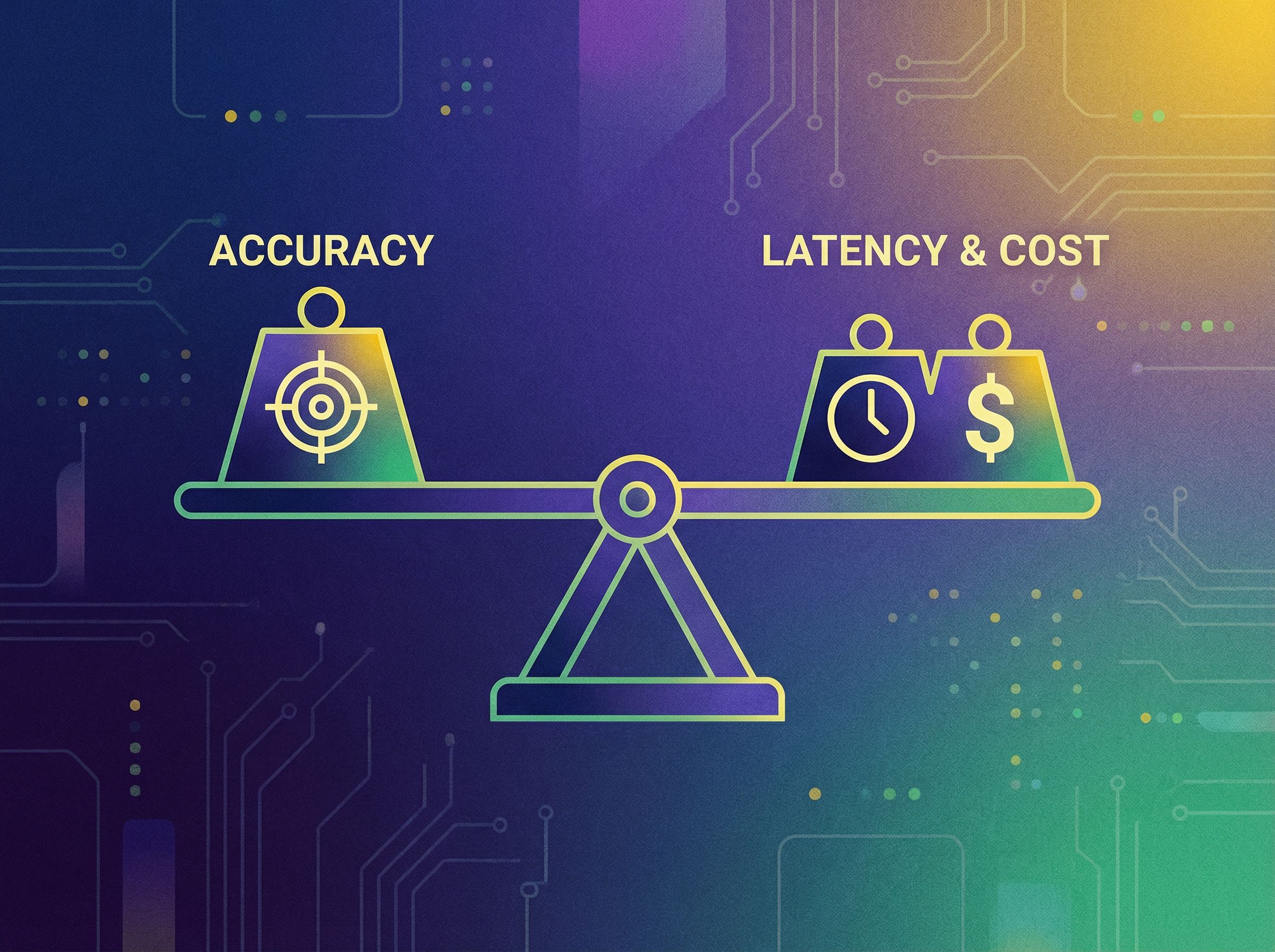
High-performing AI is a balance: improve accuracy, reduce latency, and control cost efficiency with measurement and iteration.
Table of contents
What SHAPE delivers: model performance optimization
SHAPE delivers model performance optimization as a production engineering engagement with one outcome: improving accuracy, latency, and cost efficiency for the model behaviors your product depends on. We don’t optimize in isolation—we optimize against real-world constraints (SLAs, throughput, budgets, and safety requirements) with a measurable evaluation loop.
Typical deliverables
you don’t yet have model performance optimization—you have a one-time tuning effort.
Related services (internal links)
Model performance optimization is strongest when monitoring, deployment discipline, and integration surfaces are aligned. Teams commonly pair improving accuracy, latency, and cost efficiency with:
What is model performance optimization (and what it isn’t)?
Model performance optimization is the practice of systematically improving a model’s real-world utility by improving accuracy, latency, and cost efficiency—at the same time, not one at the expense of the others. In production, “performance” includes both model quality and system behavior.
Model performance optimization is not “only raising an offline score”
A model that looks strong in a notebook can still fail users if it times out, costs too much, or degrades under changing data. SHAPE treats optimization as a production loop: measure → change → validate → roll out → monitor.
What “performance” means in practice
The best teams set targets for accuracy, latency, and cost efficiency—and ship changes that improve the whole system.
Why improving accuracy, latency, and cost efficiency matters
Model performance optimization is often the difference between an AI feature that users trust and one that quietly gets ignored. When you improve accuracy, latency, and cost efficiency, you unlock adoption and sustainability at scale.
Business outcomes you can measure
Common failure modes we eliminate
Optimization levers: how we improve accuracy, latency, and cost efficiency
There is no single magic setting. SHAPE improves accuracy, latency, and cost efficiency by choosing the simplest lever that produces measurable lift—then locking it in with evaluation and monitoring.
Accuracy levers (quality and correctness)
Latency levers (make it fast enough for product)
Cost-efficiency levers (reduce spend without breaking quality)

Optimization is a trade space: choose targets, measure outcomes, and iterate with controlled rollouts.
If you can’t measure accuracy, latency, and cost efficiency in the same dashboard, you can’t optimize responsibly.
Use case explanations
1) Your LLM feature is accurate—but too slow for users
We profile the end-to-end path (retrieval, model, tools, post-processing) and reduce tail latency with caching, batching, and runtime tuning. Model performance optimization here focuses on improving accuracy, latency, and cost efficiency without making answers less trustworthy.
2) Costs are spiking as usage grows
We implement cost observability, enforce token budgets, and add routing so the system uses stronger models only when needed. This is the fastest path to cost efficiency while preserving quality and UX latency.
3) Quality is inconsistent across user segments
We add slice-based evaluation (by locale, device, product category, user tier) and target the data/prompt/retrieval gaps causing failures. This improves accuracy where it matters—without over-optimizing the average.
4) You’re shipping updates, but regressions slip into production
We create regression gates, shadow/canary rollouts, and per-version comparisons—often paired with Model deployment & versioning—so model performance optimization becomes safe and repeatable.
5) You can’t tell if the model is getting worse over time
We implement monitoring for quality proxies, drift signals, latency, and cost efficiency. When needed, we pair with AI pipelines & monitoring so improving accuracy, latency, and cost efficiency becomes an ongoing operating loop.
Start a model performance optimization engagement
Step-by-step tutorial: optimize a model in production
This playbook reflects how SHAPE runs model performance optimization with a focus on improving accuracy, latency, and cost efficiency in production—without guesswork.
—then ship one measured fix.
Talk to SHAPE about improving accuracy, latency, and cost efficiency
Wer sind wir?
Shape unterstützt Unternehmen beim Aufbau interner KI-Workflows zur Optimierung ihrer Geschäftsprozesse. Wenn Sie auf Effizienzsteigerung Wert legen, können wir Ihnen unserer Meinung nach helfen.

Kundenmeinungen
Unsere Kunden lieben die Schnelligkeit und Effizienz, die wir bieten.


Häufig gestellte Fragen
Hier finden Sie Antworten auf Ihre dringendsten Fragen zu unseren Dienstleistungen und zum Dateneigentum.
Alle generierten Daten gehören Ihnen. Wir legen großen Wert auf Ihr Eigentum und Ihre Privatsphäre. Sie können jederzeit darauf zugreifen und sie verwalten.
Absolut! Unsere Lösungen sind so konzipiert, dass sie sich nahtlos in Ihre bestehende Software integrieren lassen. Unabhängig von Ihrer aktuellen Konfiguration finden wir eine kompatible Lösung.
Wir bieten umfassenden Support für einen reibungslosen Ablauf. Unser Team steht Ihnen bei Fragen und Problemen zur Verfügung. Außerdem bieten wir Ihnen Ressourcen, mit denen Sie unsere Tools optimal nutzen können.
Ja, die Personalisierung ist ein zentrales Merkmal unserer Plattform. Sie können die Eigenschaften Ihres Agenten individuell an die Markenbotschaft und Zielgruppe anpassen. Diese Flexibilität steigert die Interaktion und Effektivität.
Wir passen die Preisgestaltung individuell an jedes Unternehmen und dessen Bedürfnisse an. Da unsere Lösungen aus intelligenten, kundenspezifischen Integrationen bestehen, hängen die Endkosten maßgeblich von der gewählten Integrationsstrategie ab.
Alle Dienstleistungen
Finden Sie Lösungen für Ihre drängendsten Probleme.