AI chatbots & recommendation systems
SHAPE builds AI chatbots & recommendation systems for deploying conversational AI and recommendation engines that are grounded, integrated, and measurable in production. This service page covers capabilities, safety and governance, real-world use cases, and a step-by-step playbook to launch and iterate reliably.

Service page • AI product engineering • AI chatbots & recommendation systems
AI chatbots & recommendation systems help teams automate conversations, personalize journeys, and increase conversion by deploying conversational AI and recommendation engines across websites, apps, and internal tools. SHAPE designs, builds, and launches production-grade assistants and recommender experiences—integrated with your data and workflows—so the system is accurate, safe, measurable, and maintainable after go-live.
Talk to SHAPE about AI chatbots & recommendation systems

Production AI is a system: conversation + knowledge + recommendations + monitoring + iteration.
Table of contents
- What SHAPE’s AI chatbots & recommendation systems service includes
- What are AI chatbots & recommendation systems?
- Benefits of deploying conversational AI and recommendation engines
- Core capabilities (chat + recommendations)
- How to choose: rule-based, retrieval, LLM, hybrid
- Security, safety, and reliability
- Use case explanations
- Step-by-step tutorial: ship a production-ready AI system
What SHAPE’s AI chatbots & recommendation systems service includes
SHAPE delivers AI chatbots & recommendation systems as a production engineering engagement focused on one outcome: deploying conversational AI and recommendation engines that users trust and teams can operate. We don’t stop at a prototype—we design the end-to-end system: data inputs, retrieval/ranking, integrations, guardrails, evaluation, monitoring, and iteration loops.
Typical deliverables
- Discovery + use-case definition: user intents, recommendation goals, success metrics, and constraints.
- Conversation + recommendation UX: flows, fallback states, escalation paths, and recommendation placements.
- Knowledge + data readiness: content inventory, data sources, taxonomy, and quality gaps.
- Retrieval + ranking design: embeddings/search, filters, reranking, and policy-based constraints.
- Model integration: model selection, prompting strategy, tools/function calling, and orchestration.
- Integrations: connect chat and recommendations to CRM/ERP/support/order systems and internal workflows.
- Evaluation framework: offline test sets, online experiments, and quality gates.
- Observability: logs, metrics, traces, dashboards, and alerts tied to user impact.
- Safety + governance: access control, PII handling, content policies, and auditability.
- Launch + iteration plan: phased rollout, A/B testing, and feedback loops.
Rule: If an assistant can influence money, customer accounts, or regulated data, AI chatbots & recommendation systems must include monitoring, safe fallbacks, and audit logs—not just “smart answers.”
Related services (internal links)
AI chatbots & recommendation systems are strongest when your data, APIs, and operational tooling are aligned. Teams commonly pair deploying conversational AI and recommendation engines with:
- Machine learning model integration for reliable inference, monitoring, and lifecycle management.
- Data pipelines & analytics dashboards to create trusted datasets and measure impact end-to-end.
- API development (REST, GraphQL) to expose stable contracts for chat tools and recommendation delivery.
- Third-party service integrations to connect knowledge sources and downstream actions.
- Custom internal tools & dashboards for human review queues, approvals, and ops workflows.
- DevOps, CI/CD pipelines for safe deployment, environments, and automated testing.
What are AI chatbots & recommendation systems?
AI chatbots & recommendation systems are product capabilities that help users get the right answer (chat) and the right next step (recommendations). When deploying conversational AI and recommendation engines, teams typically combine natural language understanding with retrieval and ranking so the system can respond accurately, personalize experiences, and take actions through integrations.
AI chatbots (conversational AI)
An AI chatbot is a conversational interface that answers questions, guides users, and completes tasks. In production, it usually includes:
- Intent handling: what the user is trying to do.
- Knowledge access: pulling facts from internal docs, databases, and tools.
- Action execution: creating tickets, updating records, triggering workflows.
- Escalation: handing off to humans when confidence is low or risk is high.
Recommendation systems (ranking + personalization)
A recommendation system selects and ranks items to help a user decide faster: products, content, next-best actions, help articles, or workflow steps. In practice, recommendations are powered by:
- Candidate generation: which items are eligible?
- Ranking: what order should they appear in?
- Constraints: business rules, availability, compliance, and policy filters.
- Feedback loops: learn from clicks, conversions, and outcomes.
If your chatbot can answer but can’t cite sources—or your recommender can rank but can’t explain constraints—trust will break. Production systems are designed for reliability and clarity.
Benefits of deploying conversational AI and recommendation engines
Organizations adopt AI chatbots & recommendation systems to reduce friction, personalize journeys, and automate repetitive work. The goal of deploying conversational AI and recommendation engines is measurable outcomes: faster resolution, higher conversion, better self-serve, and improved operator efficiency.
Business outcomes you can measure
- Higher conversion: better product discovery, smarter upsells, and fewer dead-ends.
- Lower support volume: deflect repetitive questions with accurate, grounded answers.
- Faster resolution time: assistant-guided triage, summaries, and next steps.
- Better retention: personalized recommendations that keep users engaged.
- Recovered operational capacity: teams focus on exceptions and judgment, not repetitive tasks.
When AI chatbots & recommendation systems are a strong fit
- High-volume questions with clear knowledge sources (docs, policies, catalog, CRM).
- Users need guidance through complex workflows (onboarding, troubleshooting, configuration).
- Large catalogs where discovery drives revenue (e-commerce, marketplaces, media).
- Operators need assist in queues (support, ops, compliance review).
Core capabilities (chat + recommendations)
Effective AI chatbots & recommendation systems are built from reusable capabilities. When deploying conversational AI and recommendation engines, SHAPE typically combines the following building blocks based on your risk and goals.
Conversational capabilities
- Grounded Q&A: answer questions using approved sources (with citations).
- Task assistants: collect inputs, validate rules, and execute actions via tools.
- Agent handoff: route to human support with context and suggested resolution.
- Multilingual support: consistent experiences across locales when required.
- Conversation memory (scoped): remember context safely within policy.
Recommendation capabilities
- Similarity recommendations: “related items” based on content or embeddings.
- Personalized ranking: adjust results based on user behavior and context.
- Rule + ML hybrid: apply business constraints first, then rank intelligently.
- Next-best action: guide users toward completion (setup steps, forms, learning).
- Experimentation: A/B test ranking strategies and placements.

Great recommendations combine constraints, ranking, and continuous learning.
How to choose: rule-based, retrieval, LLM, or hybrid
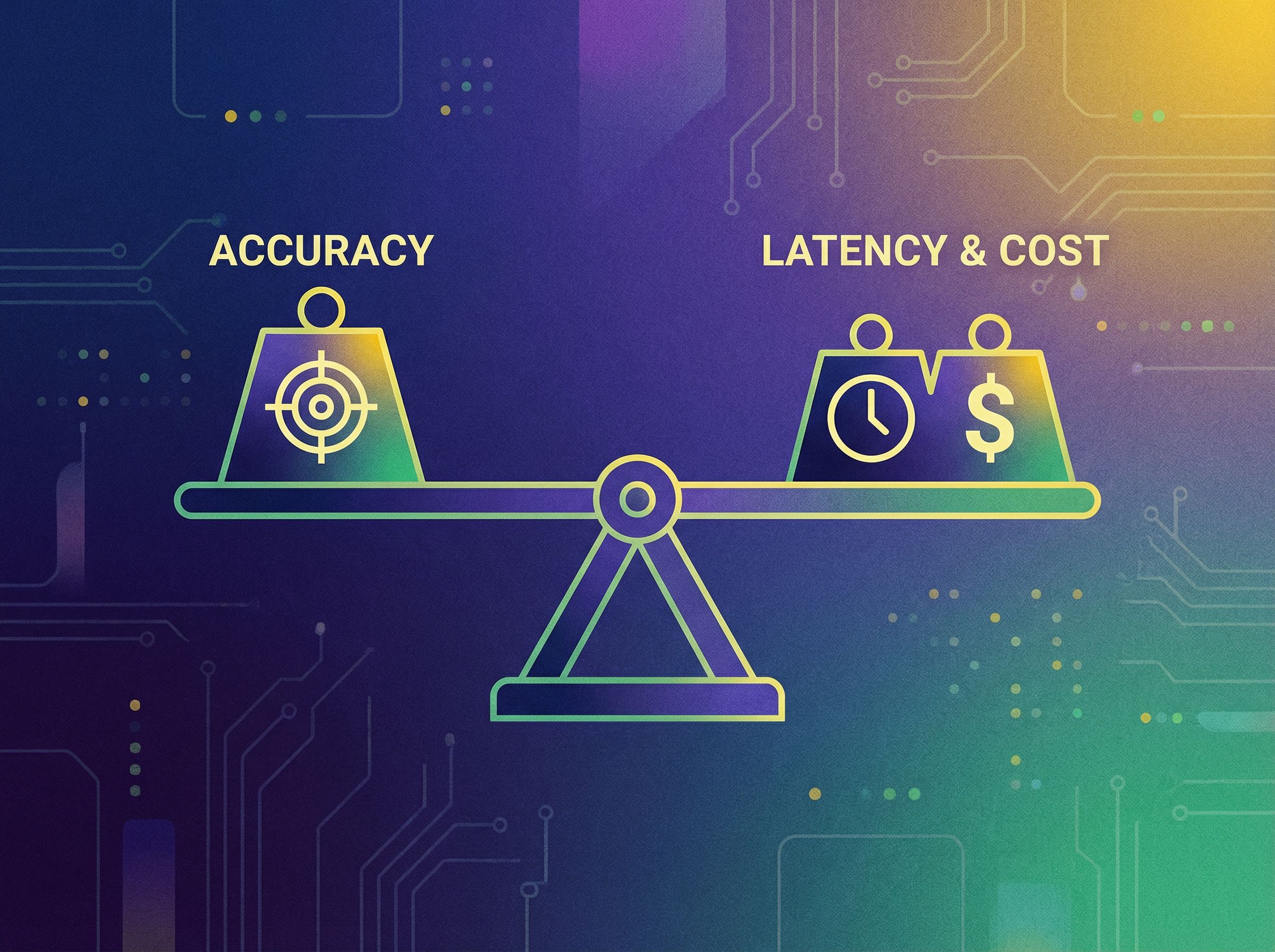
There isn’t one “best” architecture for AI chatbots & recommendation systems. The right approach depends on latency, risk, content quality, and required accuracy. SHAPE chooses the simplest design that achieves outcomes while deploying conversational AI and recommendation engines safely.
Rule-based chat and rules-first recommendations
Best for: narrow flows, strict compliance, predictable intents, and early-stage guardrails. Rules are also essential constraints within recommendation systems (availability, eligibility, policy).
Retrieval-first (search + citations) for chat
Best for: knowledge-heavy assistants. Retrieval lets the system pull relevant passages and respond with grounded answers—critical for trustworthy AI chatbots & recommendation systems.
LLM-driven assistants with tools (function calling)
Best for: task completion and multi-step guidance. The LLM is the planner; tools and APIs are the execution. This is often the fastest path to deploying conversational AI and recommendation engines that can do real work.
Hybrid recommender systems (rules + ML ranking)
Best for: production recommendations. Use rules to enforce constraints, then apply ML ranking and personalization for lift. Hybrid approaches typically outperform “pure” rules while staying controllable.
Decision rule: Use rules for constraints, retrieval for truth, and models for ranking and language—so deploying conversational AI and recommendation engines stays accurate, explainable, and operable.
Security, safety, and reliability
Trust is the product. SHAPE builds AI chatbots & recommendation systems so deploying conversational AI and recommendation engines is secure, observable, and resilient—even when data is messy, tools fail, or users attempt adversarial prompts.
Reliability controls we implement
- Fallback strategies: deterministic answers, retrieval-only mode, or human escalation.
- Timeouts + retries: safe recovery around tool calls and dependencies.
- Idempotency: safe retries for actions that write data.
- Guardrail evaluations: automated checks before responses/actions.
- Monitoring: conversation quality, recommendation CTR, conversion, and incident alerts.
Security essentials for AI systems
- Least privilege: the assistant can only access what it must.
- PII handling: redaction, retention rules, and safe logging.
- Prompt injection defenses: filtering, tool-use constraints, and policy enforcement.
- Audit logs: trace which model/version answered, what sources were used, and what actions were taken.
For measurement and reporting, teams often pair AI work with Data pipelines & analytics dashboards.
Use case explanations
1) Customer support chatbot + agent assist
Support teams lose time answering repeated questions and hunting for context. SHAPE builds AI chatbots & recommendation systems that deflect common requests, draft responses, summarize tickets, and recommend next steps—deploying conversational AI and recommendation engines that improve both self-serve and agent productivity.
2) Product discovery and personalization (e-commerce, marketplaces, content)
When catalogs grow, discovery becomes the bottleneck. We deploy recommendation engines that rank results, suggest alternatives, and personalize pages—while honoring constraints like inventory, policies, and margins.
3) Internal knowledge assistant for ops, sales, or compliance
Teams waste hours searching wikis, docs, and systems. A grounded assistant can answer policy questions, retrieve templates, and recommend the correct process—while keeping access and auditability intact.
4) Onboarding and guided setup (next-best action)
Activation improves when users always know the next step. We build chat + recommendation flows that guide configuration, recommend actions, and detect where users stall—core value from deploying conversational AI and recommendation engines.
5) B2B lead qualification and sales enablement
Conversational AI can qualify leads, route inquiries, and recommend relevant case studies or product modules—while integrating with CRM and internal tooling for a measurable pipeline impact.
Step-by-step tutorial: ship a production-ready AI chatbot + recommendation engine
This playbook mirrors how SHAPE ships AI chatbots & recommendation systems—deploying conversational AI and recommendation engines that are reliable, measurable, and safe.
- Step 1: Define the job-to-be-done and success metrics: Pick one high-impact journey (e.g., support deflection, product discovery, onboarding). Define metrics like resolution time, CTR, conversion, containment rate, and human escalation rate.
- Step 2: Inventory data sources and permission boundaries: List the knowledge and data the system can use (docs, tickets, catalog, CRM). Define what is allowed, what is restricted, and what requires approval.
- Step 3: Design the conversation and recommendation UX: Map intents, recommended items/next steps, and fallback states (no result, low confidence, policy violation). Make escalation to humans explicit.
- Step 4: Choose an architecture (retrieval, LLM tools, hybrid ranking): Use the simplest approach that meets requirements. Most teams succeed with a hybrid: retrieval for grounding + model for language + ranking for recommendations.
- Step 5: Implement retrieval + ranking with constraints: Create a pipeline for indexing content, defining metadata filters, and applying reranking. For recommendations, define candidate generation + business rules + ranking strategy.
- Step 6: Integrate tools and actions via APIs: Connect the assistant to approved actions (create ticket, update order, fetch account). Stable contracts are critical—see API development (REST, GraphQL).
- Step 7: Build evaluation and safety gates: Create a test set of real queries and expected outcomes. Add checks for hallucinations, policy violations, and action safety before responses ship.
- Step 8: Add observability (dashboards + alerts + audit logs): Track latency, tool failures, answer quality, escalation rates, CTR, and conversion. Ensure every action is traceable by model version and source.
- Step 9: Roll out gradually and iterate with feedback loops: Launch to a small segment, review conversations and recommendation performance, refine prompts/ranking/rules, then expand. This is how deploying conversational AI and recommendation engines compounds value.
Practical tip: The fastest way to improve AI chatbots & recommendation systems is to log outcomes, review failures weekly, and ship small iteration cycles—treat it like a product, not a one-off feature.
Wer sind wir?
Shape unterstützt Unternehmen beim Aufbau interner KI-Workflows zur Optimierung ihrer Geschäftsprozesse. Wenn Sie auf Effizienzsteigerung Wert legen, können wir Ihnen unserer Meinung nach helfen.

Kundenmeinungen
Unsere Kunden lieben die Schnelligkeit und Effizienz, die wir bieten.


Häufig gestellte Fragen
Hier finden Sie Antworten auf Ihre dringendsten Fragen zu unseren Dienstleistungen und zum Dateneigentum.
Alle generierten Daten gehören Ihnen. Wir legen großen Wert auf Ihr Eigentum und Ihre Privatsphäre. Sie können jederzeit darauf zugreifen und sie verwalten.
Absolut! Unsere Lösungen sind so konzipiert, dass sie sich nahtlos in Ihre bestehende Software integrieren lassen. Unabhängig von Ihrer aktuellen Konfiguration finden wir eine kompatible Lösung.
Wir bieten umfassenden Support für einen reibungslosen Ablauf. Unser Team steht Ihnen bei Fragen und Problemen zur Verfügung. Außerdem bieten wir Ihnen Ressourcen, mit denen Sie unsere Tools optimal nutzen können.
Ja, die Personalisierung ist ein zentrales Merkmal unserer Plattform. Sie können die Eigenschaften Ihres Agenten individuell an die Markenbotschaft und Zielgruppe anpassen. Diese Flexibilität steigert die Interaktion und Effektivität.
Wir passen die Preisgestaltung individuell an jedes Unternehmen und dessen Bedürfnisse an. Da unsere Lösungen aus intelligenten, kundenspezifischen Integrationen bestehen, hängen die Endkosten maßgeblich von der gewählten Integrationsstrategie ab.
Alle Dienstleistungen
Finden Sie Lösungen für Ihre drängendsten Probleme.