Cloud architecture (AWS, GCP, Azure)
SHAPE’s cloud architecture (AWS, GCP, Azure) service designs cloud-based infrastructure that is secure, scalable, and cost-aware. This page explains core cloud architecture components, common patterns, real-world use cases, and a step-by-step process to plan a reliable cloud foundation.

Service page • Backend & Infrastructure • Cloud architecture (AWS, GCP, Azure)
Cloud Architecture (AWS, GCP, Azure): Designing Cloud-Based Infrastructure That Scales
Cloud architecture (AWS, GCP, Azure) is how SHAPE helps teams plan, design, and evolve cloud-based infrastructure that’s secure, resilient, and cost-aware. We translate product requirements into practical architecture decisions—networking, compute, data, identity, observability, and delivery pipelines—so you can ship faster without betting the business on brittle systems.

Table of contents
- What SHAPE’s cloud architecture service includes
- What is cloud architecture?
- Core components of cloud-based infrastructure
- Cloud architecture patterns (IaaS, PaaS, serverless, hybrid)
- Security, reliability, observability, and governance
- Use case explanations
- Step-by-step tutorial: design cloud-based infrastructure
- Call to action
- Technical SEO elements
What SHAPE’s cloud architecture service includes
SHAPE delivers cloud architecture (AWS, GCP, Azure) as an end-to-end engagement: we define target outcomes, choose the right cloud-native building blocks, and produce an actionable blueprint for designing cloud-based infrastructure that engineering can implement with confidence.
What you get in a typical engagement
- Architecture discovery: requirements, constraints, risk tolerance, compliance needs, and growth assumptions.
- Reference architecture: diagrams and decisions for networking, compute, data, and identity across AWS, GCP, or Azure.
- Scalability + reliability plan: SLIs/SLOs, failure modes, capacity approach, and resilience patterns.
- Security architecture: identity, least privilege, segmentation, secrets management, and audit strategy.
- Data architecture: storage, databases, eventing, backups, and retention strategy.
- Observability: logging, metrics, tracing, alerting, and runbooks tied to real user impact.
- Delivery foundations: CI/CD, infrastructure-as-code (IaC) direction, and environment strategy.
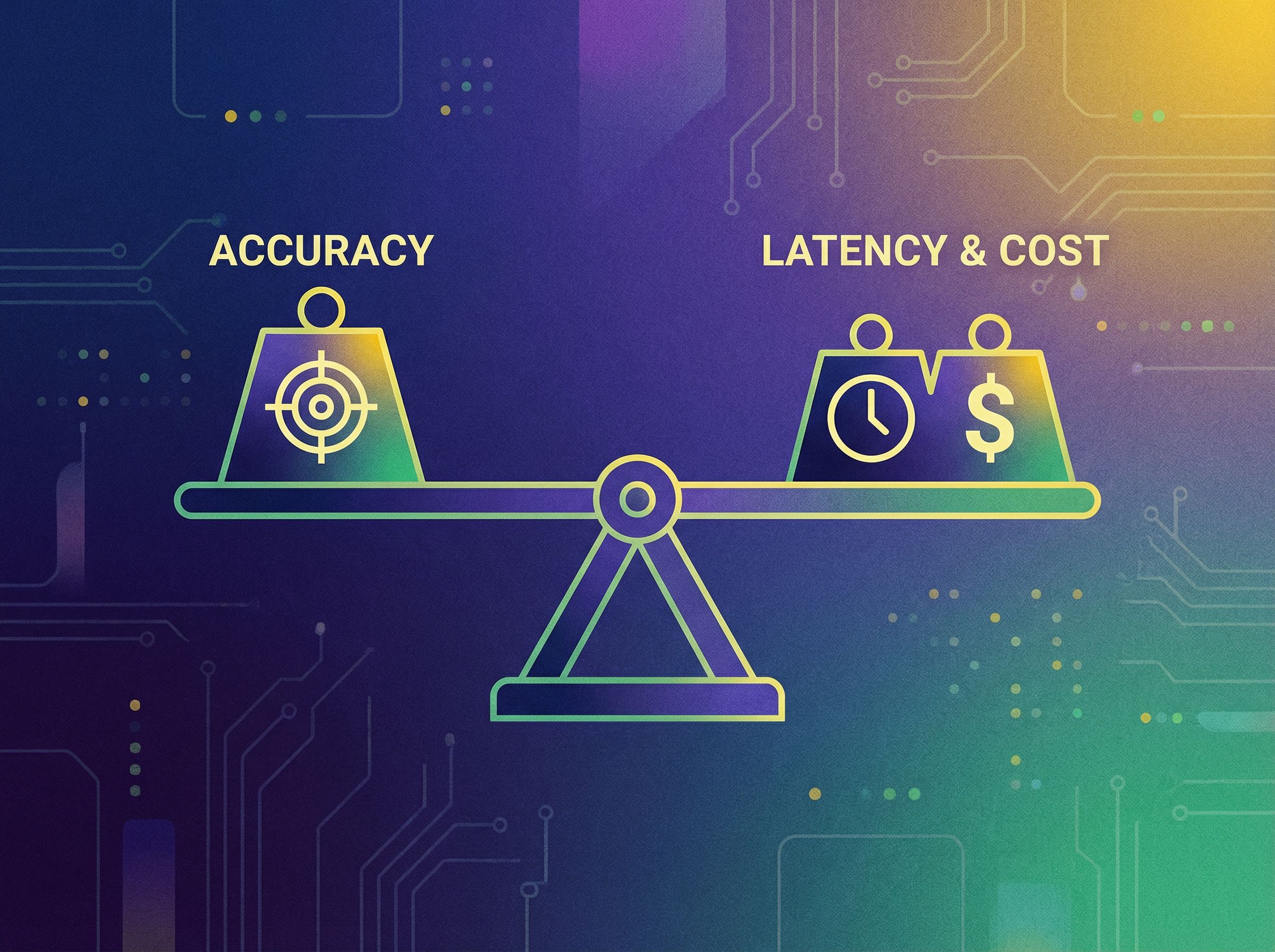
- Cost strategy: budgets, tagging, right-sizing approach, and cost/performance trade-offs.
Cloud architecture is a product accelerator. When cloud-based infrastructure is designed intentionally, teams spend less time firefighting—and more time shipping.
Related services (internal links)
Cloud architecture (AWS, GCP, Azure) connects tightly to application boundaries, APIs, and performance. SHAPE often pairs cloud work with:
- App architecture & scalability to align app boundaries with cloud-based infrastructure decisions.
- API development (REST, GraphQL) to design backend contracts that fit your compute and data layers.
- Web apps (React, Vue, Next.js, etc.) when hosting, rendering strategy, and edge delivery impact UX.
- Performance optimization & SEO implementation to ensure cloud delivery supports fast experiences end-to-end.
- CMS development (headless, WordPress, Webflow) when content delivery and deployments must stay reliable.
What is cloud architecture?
Cloud architecture is the blueprint for how your systems run in the cloud: how users reach your product, how services communicate, where data lives, and how the system stays secure and reliable under change. In practice, cloud architecture (AWS, GCP, Azure) is the set of design decisions that make cloud-based infrastructure operate predictably—across normal traffic, peak events, incidents, and continuous releases.
Why cloud architecture matters (beyond “moving to the cloud”)
- Speed with safety: ship frequently without breaking production.
- Elastic scaling: handle spikes without overpaying for idle capacity.
- Built-in resilience: design for failures instead of hoping they won’t happen.
- Security by default: identity, segmentation, and monitoring are designed in—not patched later.
- Operational clarity: teams can troubleshoot quickly with strong observability.
Cloud architecture vs. cloud migration
A migration is the act of moving workloads. Cloud architecture is the long-term system design: how you structure cloud-based infrastructure so it’s maintainable, secure, and scalable. Many teams migrate first and then need to re-architect—SHAPE helps you avoid that churn by starting with cloud architecture (AWS, GCP, Azure) decisions that support your roadmap.
The goal isn’t “using the cloud.” The goal is designing cloud-based infrastructure that delivers the user experience and business outcomes you need—reliably.
Core components of cloud-based infrastructure
Most cloud platforms differ in names and interfaces, but the architecture building blocks are consistent. SHAPE’s cloud architecture (AWS, GCP, Azure) work focuses on assembling these components into a cohesive system for designing cloud-based infrastructure.
Networking: how traffic enters and moves
Networking defines security and performance boundaries. Common elements include:
- Virtual networks and subnets for segmentation
- Load balancing and TLS termination
- Private connectivity between services and data layers
- Edge delivery for global performance when needed
Compute: where applications run
Compute choices shape scalability and operations. In cloud architecture (AWS, GCP, Azure), compute typically includes:
- Virtual machines (traditional, flexible, more operational responsibility)
- Containers (standardized workloads, good for microservices and portability)
- Serverless (event-driven execution, minimal server management)
Data services: how information is stored and retrieved
- Relational databases for transactional data and strong consistency
- NoSQL stores for high-throughput or flexible schemas
- Object storage for files, media, backups, and data lakes
- Messaging / event streaming for decoupled systems and async workflows
Identity and access management (IAM)
Identity is the control plane of cloud-based infrastructure. We design:
- Least-privilege access for humans and services
- Role separation (dev, ops, finance, security)
- Secret handling and key management policies
- Auditability (who did what, when)
Operations: observability, backups, and incident readiness
Cloud architecture (AWS, GCP, Azure) succeeds when the system can be operated confidently:
- Logs, metrics, traces tied to user impact and SLOs
- Backups, retention rules, and recovery drills
- Runbooks and escalation paths

Cloud architecture patterns (IaaS, PaaS, serverless, hybrid)
There’s no single “correct” cloud setup. SHAPE selects patterns that match your workload, team maturity, and delivery goals—while keeping designing cloud-based infrastructure practical and maintainable.
IaaS (infrastructure-first) architecture
IaaS uses cloud-provided compute, storage, and networking, while your team manages OS-level concerns and runtime operations. This approach can be a strong fit when you need flexibility, legacy compatibility, or deep control.
- Strengths: control, compatibility, predictable abstraction
- Trade-offs: more ops overhead, patching, and capacity planning
PaaS (managed services) architecture
PaaS shifts more responsibility to managed services (managed databases, managed runtimes, managed queues). Cloud architecture (AWS, GCP, Azure) often becomes more reliable and faster to run when you use managed components strategically.
- Strengths: faster operations, fewer undifferentiated tasks
- Trade-offs: platform constraints, managed limits, vendor-specific behavior
Serverless and event-driven architecture
Serverless is a strong fit when work is event-driven (files uploaded, messages received, scheduled jobs) and you want elastic execution. It can reduce ops overhead while improving burst handling—especially for new products.
- Strengths: elasticity, pay-for-use, quick iteration
- Trade-offs: observability complexity, cold starts, event + permission sprawl without discipline
Hybrid and multi-cloud architecture
Sometimes you must run across environments (on-prem + cloud, or multiple clouds). SHAPE designs hybrid approaches with clear boundaries so cloud-based infrastructure remains understandable and secure.
- Common drivers: compliance, data residency, legacy dependencies, M&A, latency constraints
- Key need: consistent identity, networking, and observability across environments
Decision rule: pick the simplest cloud architecture (AWS, GCP, Azure) pattern that meets reliability, security, and delivery speed targets—then add complexity only when measured needs demand it.
Security, reliability, observability, and governance
Strong cloud architecture (AWS, GCP, Azure) is not just a diagram—it’s how the system behaves under stress, mistakes, and attacks. SHAPE emphasizes guardrails that keep cloud-based infrastructure secure and operable as teams and services scale.
Security: identity, segmentation, and least privilege
- Identity-first access: authenticated access for humans and services
- Network segmentation: reduce blast radius with private subnets and controlled egress
- Secrets management: no credentials in code; rotation and audit trails
- Encryption: in transit and at rest, aligned with data sensitivity
Reliability: resilience patterns that match your SLOs
Designing cloud-based infrastructure for reliability typically includes:
- Multi-zone strategy when availability targets require it
- Retries with backoff and idempotency for distributed systems
- Graceful degradation so partial failures don’t become full outages
- Disaster recovery planning aligned to RTO/RPO needs
Observability: see issues before customers do
We design observability around what matters: user experience and business-critical workflows.
- SLIs/SLOs (latency, error rate, availability) tied to real journeys
- Structured logging and trace correlation across services
- Actionable alerts (few, meaningful, owned)
Governance and cost controls: avoid cloud sprawl
- Account/subscription/project structure for environments and team boundaries
- Tagging standards for ownership, cost allocation, and lifecycle
- Budgets and alerts to prevent surprise spend
- Policy as guardrails to reduce insecure configuration drift
Security and reliability scale only when they’re operational. Cloud architecture (AWS, GCP, Azure) must include monitoring, access patterns, and governance—not just compute choices.
Use case explanations
1) You’re launching a new product and need a scalable foundation
Early cloud decisions can either accelerate your roadmap or create expensive rewrites. SHAPE designs cloud architecture (AWS, GCP, Azure) that starts lean but supports growth—designing cloud-based infrastructure with clear upgrade paths for scale, reliability, and compliance.
2) Your system is experiencing outages or instability as usage grows
Frequent incidents often point to missing resilience patterns, poor observability, or tight coupling between services. We stabilize cloud-based infrastructure with failure-mode analysis, improved monitoring, and architecture changes that reduce blast radius.
3) Costs are rising and no one knows why
Cost surprises usually come from unclear ownership, missing budgets, over-provisioning, and untracked data egress. Our cloud architecture (AWS, GCP, Azure) approach includes governance and cost strategy so spend matches value.
4) You’re modernizing from monolith to services (or containerizing)
Modernization is a systems project: networking, identity, deployment, and observability must evolve together. We design cloud-based infrastructure to support incremental extraction, stable APIs, and safe rollouts.
5) You need compliance-ready cloud architecture
When compliance is required, architecture must support access control, audit logs, encryption, and data handling rules by design. SHAPE helps teams implement cloud architecture (AWS, GCP, Azure) that’s easier to explain, validate, and operate.
Step-by-step tutorial: design cloud-based infrastructure (AWS, GCP, Azure)
This practical playbook mirrors how SHAPE delivers cloud architecture (AWS, GCP, Azure)—so designing cloud-based infrastructure becomes repeatable, not reactive.
-
Step 1: Define workloads, users, and non-negotiables
List user journeys, peak expectations, data sensitivity, and compliance requirements. Write targets for availability and latency. This is the north star for cloud-based infrastructure decisions.
-
Step 2: Choose your platform strategy (AWS, GCP, or Azure)
Select based on existing org constraints, ecosystem fit, team skills, and service requirements. Cloud architecture is more about disciplined design than provider branding—but provider choice affects managed services and governance models.
-
Step 3: Design the network and environment boundaries
Define environments (dev/stage/prod), segmentation, ingress/egress, and private connectivity. Strong boundaries make cloud architecture (AWS, GCP, Azure) more secure and easier to operate.
-
Step 4: Pick compute and runtime patterns (VM, containers, serverless)
Choose the simplest runtime that meets needs. For portability and service boundaries, containers can be strong. For event-heavy workflows, serverless can reduce ops burden.
-
Step 5: Design the data layer (storage, database, backups)
Map data types to storage choices and define backup, retention, and recovery requirements. Data architecture is central to designing cloud-based infrastructure responsibly.
-
Step 6: Implement identity and access controls (least privilege)
Define roles, service identities, permission boundaries, and secrets strategy. This step is foundational for cloud architecture (AWS, GCP, Azure) security.
-
Step 7: Add observability and SLO-based alerting
Instrument logs, metrics, and traces. Define SLOs and create alerts that map to user impact. Without observability, cloud-based infrastructure becomes guesswork during incidents.
-
Step 8: Plan delivery (CI/CD) and infrastructure changes safely
Define a deployment strategy, environment promotion, and rollback approach. Treat infrastructure as code where possible so changes are reviewable and repeatable.
-
Step 9: Establish governance and cost controls
Set budgets, tagging, and policies. Create ownership clarity so teams can scale cloud architecture without creating sprawl or surprise spend.
Practical rule: If you can’t explain your cloud architecture in one page—network, compute, data, identity, observability—it’s likely too complex for your current stage.
Call to action: design cloud-based infrastructure with SHAPE
If you’re launching, scaling, modernizing, or trying to stabilize costs, SHAPE can help with cloud architecture (AWS, GCP, Azure)—focused on designing cloud-based infrastructure that’s secure, reliable, and ready for continuous delivery.
Technical SEO elements (image alt text, responsive, semantic)
- Semantic structure: uses
<nav>,<header>, and<section>with a clear H2/H3 hierarchy (no H1). - Accessible images: descriptive
altattributes reference cloud architecture (AWS, GCP, Azure) and cloud-based infrastructure. - Responsive performance: images include
loading="lazy"and flexible sizing (width="auto",height="auto") to support mobile rendering. - CTA consistency: all CTA links point to http://shape-labs.com/contact.
- Scannability: short paragraphs, structured lists, and clear subheadings support readability and rich-result extraction.
Who are we?
Shape helps companies build an in-house AI workflows that optimise your business. If you’re looking for efficiency we believe we can help.

Customer testimonials
Our clients love the speed and efficiency we provide.


FAQs
Find answers to your most pressing questions about our services and data ownership.
All generated data is yours. We prioritize your ownership and privacy. You can access and manage it anytime.
Absolutely! Our solutions are designed to integrate seamlessly with your existing software. Regardless of your current setup, we can find a compatible solution.
We provide comprehensive support to ensure a smooth experience. Our team is available for assistance and troubleshooting. We also offer resources to help you maximize our tools.
Yes, customization is a key feature of our platform. You can tailor the nature of your agent to fit your brand's voice and target audience. This flexibility enhances engagement and effectiveness.
We adapt pricing to each company and their needs. Since our solutions consist of smart custom integrations, the end cost heavily depends on the integration tactics.
All Services
Find solutions to your most pressing problems.